
XPENG's Tesla FSD Rival Goes Global in 2027 as VLA 3.0 Debuts
XPENG unveils VLA 3.0 architecture, with global NGP driver assistance due from early 2027, new energy recovery technology and a purpose-built robotaxi.
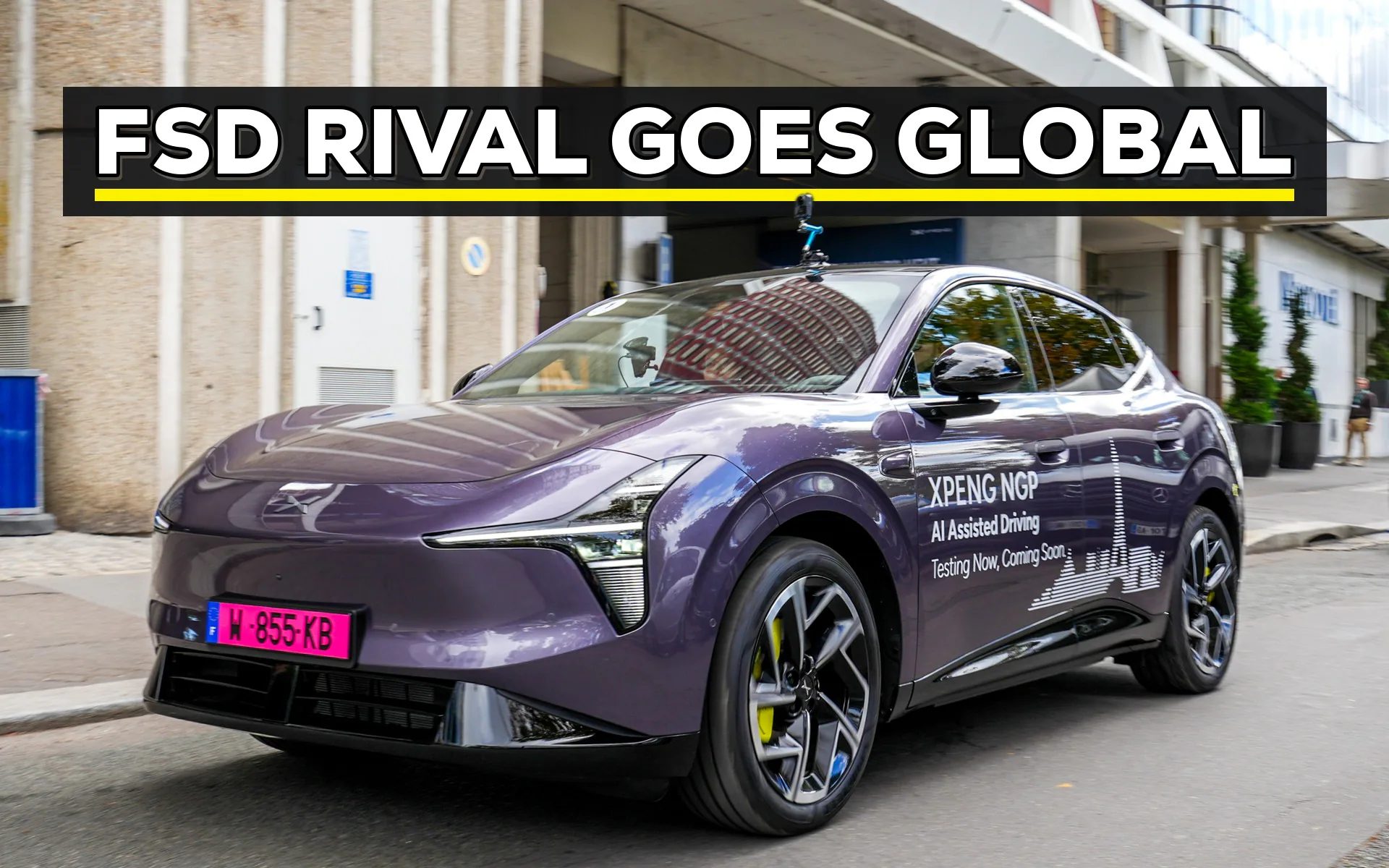

XPENG has unveiled its Turing Physical AI Architecture, also known as VLA 3.0, alongside plans to begin a global rollout of its NGP driver-assistance system in the first half of 2027.
The announcements at the brand’s eighth AI Day in Guangzhou on November 25 also included adaptive energy recovery, collision-avoidance technology and a purpose-built robotaxi scheduled for release in 2027.
Car finance or novated leasing could save you thousands
Get a free, no-obligation quote from our finance partner, Loan Options — for straightforward car finance, or package this car through your salary with a novated lease.
NGP currently uses XPENG’s VLA 2.0 technology and has undergone localisation testing in Germany, the Netherlands and France. Public urban NGP test rides opened at the company’s Paris retail store in November.
For Australia, XPENG’s Head of International Business, Alex Tang, told CarSauce in June that Australia would be among the first batch of markets to receive VLA 2.0 in 2027. The full model requires the triple Turing chip hardware, rated at 2250 TOPS, fitted to new global models from the L03 onwards.
That earlier Australian commitment concerns VLA 2.0, rather than the newly unveiled VLA 3.0 architecture. XPENG has not given Australian timing for VLA 3.0, Turing AI Co-driving or robotaxis.
The new architecture combines three layers: System 0 manages underlying hardware and physical control, System 1 uses VLA 2.0 for real-time responses, and System 2 handles higher-level planning. Feedback from physical actions feeds back into the system, providing a shared foundation for vehicles and humanoid robots.
XPENG’s X-VMC 2.0 vehicle motion control system links propulsion, braking, steering and suspension, extending AI control beyond driving assistance to energy management and cabin comfort.
The first feature under its Turing AI Co-driving programme is VLA Adaptive Deceleration, which adjusts deceleration and energy recovery according to the road scene when the driver releases the accelerator.
XPENG claims its urban congestion testing delivered a 12.4 per cent increase in usable driving range compared with energy recovery switched off, rather than against an existing regenerative-braking setting. The first over-the-air rollout is scheduled for December 2026.
The company is also developing AEX 360-degree active avoidance, which coordinates vehicle movement in response to potential collision risks.
| Technology | Function | Announced timing |
|---|---|---|
| VLA Adaptive Deceleration | Road-scene-based deceleration and energy recovery | First OTA rollout in December 2026 |
| NGP | VLA 2.0-powered driver assistance | First global rollout targeted for the first half of 2027 |
| AEX 360-degree active avoidance | Coordinated vehicle movement to respond to collision risks | Under development |
| YOYO-01 | Purpose-built robotaxi for commercial deployment | Release scheduled for 2027 |
Separate from its consumer driver-assistance programme, XPENG has begun Level 4 driverless passenger testing in Guangzhou, with demonstration operations in selected areas planned by the end of 2026.
The programme progressed from staffed to driverless road testing in eight months and secured its Guangzhou demonstration operation qualification within 11 months of the business being announced.
XPENG plans to supply vehicle platforms and autonomous-driving technology to operating partners, rather than positioning itself solely as a service operator. Its first purpose-built commercial robotaxi, the YOYO-01, is scheduled for release in 2027, with international expansion also a stated ambition.
IRON robot targets retail work in 2027
XPENG also gave its IRON humanoid robot a public debut, applying the shared architecture to navigation, task planning and physical movement.
IRON has 76 degrees of freedom, more than 1500 tactile sensing points and three Turing AI chips. Its functions include voice- or app-directed tasks, autonomous charging and operating-health monitoring.
Store-assistant training in XPENG retail outlets is scheduled to begin in the first quarter of 2027, ahead of a targeted public release in the second quarter.
Got a car to sell or trade in?
Get competing offers from dealers with CarSauce Sell. Free, no obligation.
Get my offersFrequently Asked Questions
XPENG’s Head of International Business, Alex Tang, said Australia would be among the first global markets for VLA 2.0 in 2027. The full model requires triple Turing chip hardware in new global models from the L03 onwards. Australian timing for VLA 3.0 has not been given.
It comes from XPENG’s urban congestion tests of VLA Adaptive Deceleration, measured against driving with energy recovery switched off. It is not a claimed improvement over an existing regenerative-braking setting.
No. NGP is XPENG’s VLA 2.0-powered driver-assistance system. Its separate Level 4 robotaxi programme has begun driverless passenger testing in Guangzhou, with the purpose-built YOYO-01 scheduled for release in 2027.
Related Articles

XPENG Will Put Its Driver-Assist Tech Behind a Subscription From 2027
15 hours ago

XPENG Is Weighing Its First Ute, and Australia Is a Big Reason Why
3 days ago

The XPENG G9L’s First Right-Hand-Drive Price Is In, and Australia’s Next
4 days ago

2026 XPENG G6 Drops to $49,990 Drive-Away, Well Under a Tesla Model Y
1 week ago