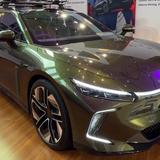
Zeekr Says Its 7X Electric SUV Could Become A 2000-A-Month Hit In Australia
Zeekr says its 7X electric SUV could reach 2000 monthly sales in Australia as fuel prices, pricing and dealer growth support demand.


Zeekr believes its 7X electric SUV could eventually reach around 2000 sales per month in Australia, as the brand looks to build on strong early demand for its Tesla Model Y rival.
According to March 2026 sales figures supplied by VFACTS, Zeekr recorded 709 sales in Australia for the month, giving it a 0.7 per cent market share.
Car finance or novated leasing could save you thousands
Get a free, no-obligation quote from our finance partner, Loan Options — for straightforward car finance, or package this car through your salary with a novated lease.
The 7X accounted for almost all of that volume, with 679 sales in March. The Zeekr 009 people mover and Zeekr X small SUV each recorded 15 sales.
Year-to-date, Zeekr has recorded 1832 sales in Australia across the first three months of 2026.
April sales data has not yet been released, but Zeekr expects the 7X to continue building momentum.
For context, April sales for the Tesla Model Y in April - a month catalysed by the War in Iran and fuel panic buying - saw the Model Y sell 1225 cars.
Speaking with CarSauce in China, Zeekr International Vice President Mars Chen pointed to rising fuel prices linked to the conflict in Iran as one factor pushing more Australian buyers to consider EVs.
“Especially after what happened in the Gulf area with the rising price for fuel, Australian customers, more and more Australian customers, really thinking about to buy EV,” Chen said.
Chen said Zeekr still sees further growth potential for the 7X in Australia, supported by ongoing promotion and an expanding retail footprint.
“I believe still we can do more for 7X for this model,” Chen said.
“Because one way, we’re constantly investing, promoting this car to the public. Another way that, another side that our sales network is still growing in the country. Some cities like Sydney, Melbourne, we’re going to have more stores.”
When asked how far 7X sales could grow locally, Chen said monthly sales of around 2000 units were possible.
“I’m not going to say we are going to do 3000, 4000 a month, but 2000 a month is not really that surprising,” he said.
Asked whether that figure could be sustained long-term, Chen replied: “Yeah. That’s our plan and that’s our mission.”
If achieved, 2000 monthly sales would represent a significant increase over the 7X’s March result, which already made up the overwhelming majority of Zeekr’s local volume.
The Zeekr 7X is currently priced from $57,900 before on-road costs in Australia.
The range opens with the 7X RWD, followed by the 7X Long Range RWD from $63,900 before on-road costs, and the 7X Performance AWD from $72,900 before on-road costs.
A 7X Performance AWD Black Edition is also available from $75,900 before on-road costs.
Zeekr says demand is not being driven only by the cheapest version of the 7X.
According to the brand, around 60 to 70 per cent of 7X volume is coming from the Performance model, while the entry model accounts for only around five to 10 per cent.
“Which means customer choose our car, not because of the price,” a Zeekr executive said during the same media discussion.
“It’s because of the competitiveness of this car, because of the design, because of nice future, because of performance, because of driving experience, customer choose this car.”
The company also indicated it plans to keep current 7X pricing in place.
When asked whether Zeekr would maintain its current pricing strategy for the 7X, the response was clear.
“We will keep it. We will keep it. In the current model, yes, we will keep it that way,” the executive said.
Chen said the 7X will remain one of Zeekr’s key global models, comparing the role of the 7X and upcoming 7GT to Tesla’s Model Y and Model 3 pairing.
“The EV industry has nothing to do with the number of models,” Chen said.
“Tesla rocked the world with two models. So I think that 7X is one of the cars for this company. We’re going to make this car a global model, long lasting. Keep evolving.”
Chen also hinted at future 7X-based variants, although he stopped short of confirming details.
“In this moment we have many options to make 7X more appealing, more interesting for the customer,” he said.
The 7X and upcoming 7GT will remain fully electric, with Chen ruling out hybrid versions of both models.
“No, no, no plan to make these two cars hybrid,” Chen said when asked whether the 7X or 7GT could receive hybrid powertrains.
Zeekr will instead use larger “super hybrid” models, including the 8X and 9X, to target buyers wanting longer-distance flexibility and less reliance on charging infrastructure.
For now, however, the 7X appears to be the centrepiece of Zeekr’s Australian growth plans, with the brand betting on fuel-price pressure, sharp pricing, Performance model demand and a larger retail footprint to lift sales further.
Interested in the Zeekr 7X?
Browse all available variants, compare specifications, and get the best price with CarSauce Buy.
FAQs
According to VFACTS data for March 2026, Zeekr recorded 709 sales in Australia, with 679 of those coming from the Zeekr 7X electric SUV. That gave the brand a 0.7 per cent market share for the month. Zeekr International Vice President Mars Chen says the company believes the Zeekr 7X could eventually reach around 2000 sales per month in Australia. He also indicated that sustaining that 2000-a-month figure is part of Zeekr’s long‑term plan and mission for the 7X in this market.
The Zeekr 7X price in Australia currently starts from $57,900 before on‑road costs for the 7X RWD. The mid‑spec 7X Long Range RWD is priced from $63,900 before on‑road costs, while the 7X Performance AWD starts from $72,900 before on‑road costs. At the top of the range is the 7X Performance AWD Black Edition, from $75,900 before on‑road costs. Zeekr executives say they intend to keep this current pricing strategy in place for the existing 7X line‑up.
Zeekr executives say Australian customers are not choosing the 7X purely on price, but for its overall competitiveness as an electric SUV. They point to the 7X’s design, performance, driving experience and features as key reasons buyers are opting for it over rivals such as the Tesla Model Y. Around 60 to 70 per cent of Zeekr 7X sales in Australia are for the higher‑spec Performance model, while the entry‑level variant accounts for only about five to 10 per cent of volume, suggesting demand is being driven by perceived value and capability rather than the cheapest ticket price.
Zeekr links part of the Zeekr 7X’s growing demand in Australia to rising fuel prices associated with the conflict in Iran and broader instability in the Gulf region. Mars Chen says more Australian customers are now seriously considering electric vehicles as petrol prices climb. The brand expects this fuel‑price pressure, combined with competitive EV pricing and expanding dealer coverage, to support further growth in Zeekr 7X sales across the country.
No. Zeekr has ruled out hybrid powertrains for both the Zeekr 7X and the upcoming Zeekr 7GT. Mars Chen says these models will remain fully electric as part of the brand’s global EV strategy. Instead, Zeekr plans to use larger “super hybrid” models, including the 8X and 9X, to appeal to buyers who want longer‑distance flexibility and reduced reliance on Australia’s charging infrastructure, while keeping the 7X as a core battery‑electric SUV.
Zeekr says the 7X is the centrepiece of its Australian growth strategy and will be treated as a long‑lasting global model that will keep evolving. The company is investing in ongoing promotion of the Zeekr 7X and expanding its sales network, with more Zeekr stores planned in major cities such as Sydney and Melbourne. This growing retail footprint, combined with stable pricing and strong interest in the Performance variants, underpins Zeekr’s confidence that the 7X can build on its early sales momentum in Australia.